
Home > Guitars
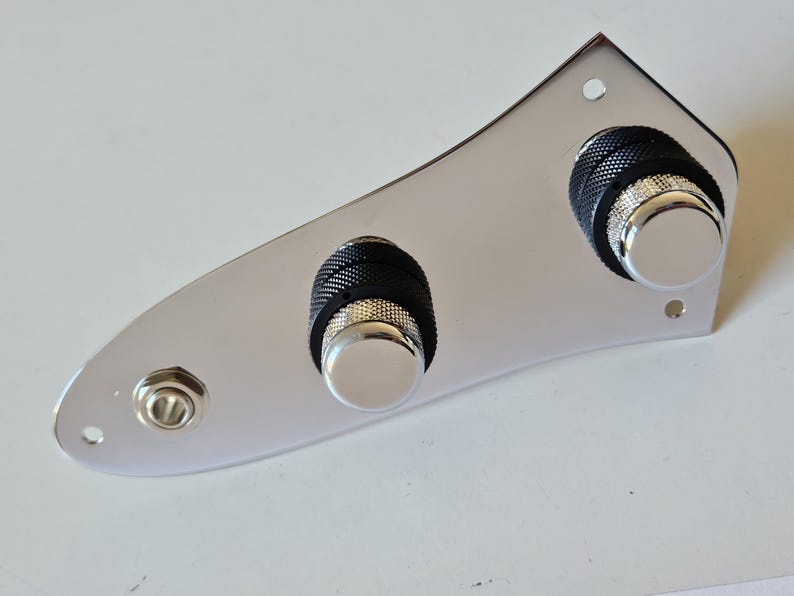

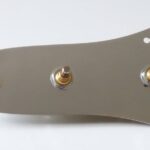
Modeled after the very first Jazzbasses from 1960 this plate features a volume and a tone control for each pickup.
Two CTS dual concentric stacked pots do the job.
Besides great looks this plate has some advantages over the modern jazz bass plates.
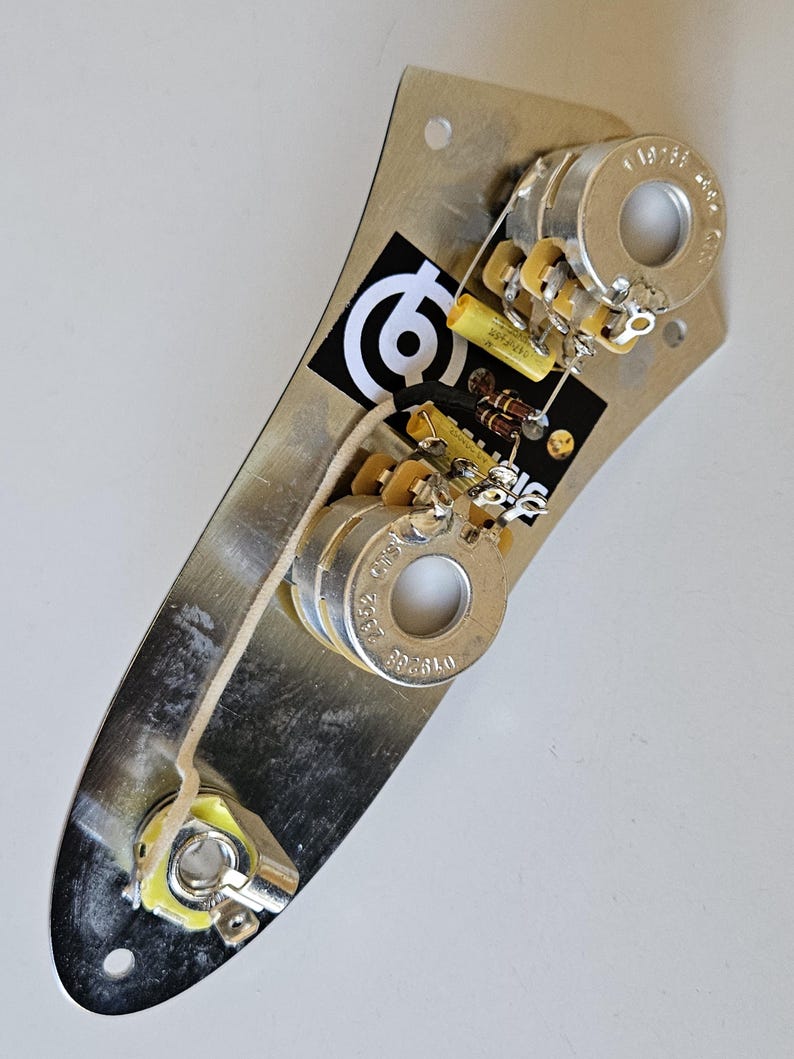
Because a set of mixing resistors is added between the potentiometers the pickups can be mixed/blended together in a smoother way and
the volume pots can be wired as real voltage dividers, preventing the heavy pickup loading that normally occurs when turning down the
volume in Jazzbass wirings and keeping the sound more open and defined.
The two dual concentric potentiometers are way more expensive than the three standard pots used in modern plates.
Adding the resistors and the extra tone cap involves labor time which isn't cheap either.
Leo Fender was a practical person who liked to do things economically.
In 1961 he changed the Jazzbass control plate design to what we still use today: VVT
Commercially a wise decision: cheaper materials and easier to build….soundwise.. hmmm…not the best decision IMO.
This plate is handbuilt, with the highest quality components: Fender 3-hole brass JB plate, CTS dual concentric potentiometers, carbon composition resistors, Mallory 150 series capacitors.
If you already have a 3-hole Jazzbass plate you can reuse your plate and order a loom only.
If you have a 4-hole plate or no plate or all order a complete set: loom mounted on a plate.
Product Information
5.0 (2 reviews)
Modeled after the very first Jazzbasses from 1960 this plate features a volume and a tone control for each pickup.
Two CTS dual concentric stacked pots do the job.
Besides great looks this plate has some advantages over the modern jazz bass plates.
Because a set of mixing resistors is added between the potentiometers the pickups can be mixed/blended together in a smoother way and
the volume pots can be wired as real voltage dividers, preventing the heavy pickup loading that normally occurs when turning down the
volume in Jazzbass wirings and keeping the sound more open and defined.
The two dual concentric potentiometers are way more expensive than the three standard pots used in modern plates.
Adding the resistors and the extra tone cap involves labor time which isn't cheap either.
Leo Fender was a practical person who liked to do things economically.
In 1961 he changed the Jazzbass control plate design to what we still use today: VVT
Commercially a wise decision: cheaper materials and easier to build….soundwise.. hmmm…not the best decision IMO.
This plate is handbuilt, with the highest quality components: Fender 3-hole brass JB plate, CTS dual concentric potentiometers, carbon composition resistors, Mallory 150 series capacitors.
If you already have a 3-hole Jazzbass plate you can reuse your plate and order a loom only.
If you have a 4-hole plate or no plate or all order a complete set: loom mounted on a plate.
About the Seller

4.9 (201 reviews)
 Sells In
 No. of Swaps
 5.0
5.0